Simplify tax preparation with a clear checklist for documents, Schedule C expenses, business records, and filing support from


 By Wealth Tea Society
October 19, 2026
Tax season feels much harder when documents are scattered across email inboxes, bank accounts, desk drawers, and old folders.
A better Tax Preparation process starts months before a return is filed. Good organization helps you understand your income, identify supporting records, review business expenses, and give your tax preparer cleaner information.
Wealth Tea Society offers tax preparation and tax organization for individuals, families, and small business owners. Its service may include tax intake, document review, Schedule C expense organization, prior year return support, and tax preparation where applicable.
That combination is useful because filing is only one part of the process. Getting financially organized first can make everything feel much less intimidating.
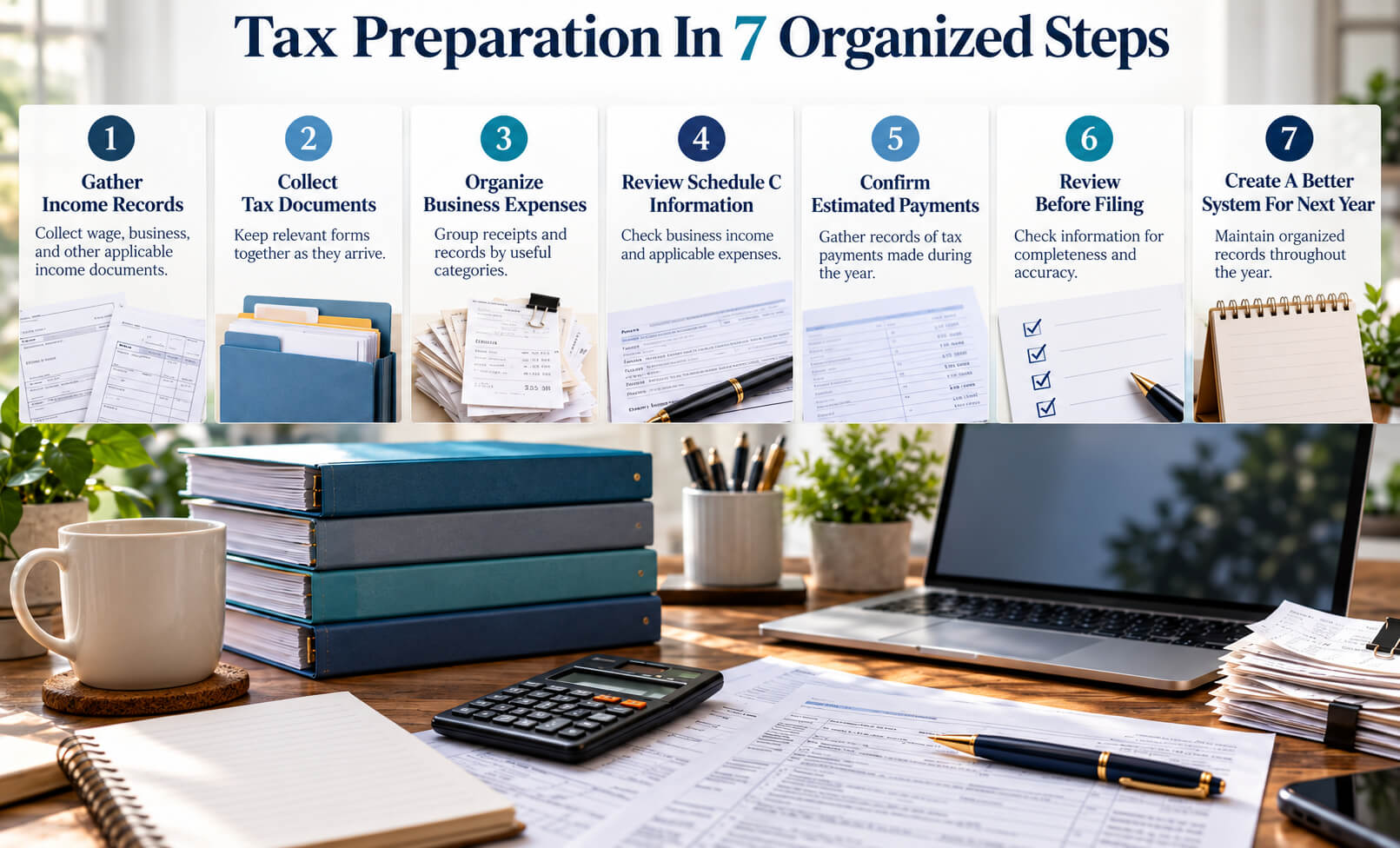
The IRS states that good business records help taxpayers monitor business progress, identify income sources, track deductible expenses, prepare tax returns, and support information reported on those returns.
This is particularly important for business owners.
A missed receipt might represent a legitimate business expense that is harder to substantiate later. An unorganized payment account can make it difficult to separate personal spending from business activity.
I think most people know the feeling of finding an important receipt weeks after they needed it. It is frustrating, but it is also preventable with a simple system.
| Area | What To Organize | Why It Matters |
| Income | Wages, business income, interest, and applicable tax forms | Supports accurate income reporting |
| Business Expenses | Receipts, invoices, statements, and payment records | Helps substantiate eligible expenses |
| Personal Tax Documents | Relevant forms and records based on your situation | Helps prepare a complete return |
| Prior Returns | Copies of previously filed returns | Can provide useful historical information |
| Record Storage | Organized digital or physical files | Makes future preparation easier |
Tax filing affects an enormous number of households.
By May 8, 2026, the IRS had received approximately 144.99 million individual income tax returns and processed approximately 143.93 million. More than 141 million returns had been electronically filed.
The IRS had also issued approximately 99.14 million refunds, with an average refund of 3276 dollars at that point in the season.
These figures relate to the 2026 filing season and do not predict what any individual taxpayer will receive.
A practical Tax Preparation Checklist can reduce last minute confusion.
Start by gathering information that applies to your situation.
The exact Documents Needed For Tax Preparation depend on your personal or business circumstances.
If you prefer using a Tax Preparation Checklist PDF, you can create a printable version of these categories and mark items as documents arrive. Wealth Tea Society should only advertise a downloadable PDF if it actually provides one on the website.
Tax preparation for small business starts with reliable bookkeeping and documentation.
The IRS says business records should clearly show income and expenses. Supporting documents may include invoices, receipts, deposit information, paid bills, canceled checks, and other transaction records.
A good Small Business Tax Preparation Checklist may include:
Professional small business tax preparation becomes much easier when those records are organized throughout the year rather than recreated during filing season.
Tax preparation for sole proprietors often involves Schedule C when the taxpayer operates a qualifying sole proprietorship.
The IRS identifies Schedule C as the form used by applicable sole proprietors to report profit or loss from a business. Independent contractors and people with gig income may also need Schedule C and Schedule SE depending on their circumstances.
This is where accurate expense organization becomes especially valuable.
Effective Schedule C tax preparation requires more than adding up receipts at the end of the year.
Organize business activity consistently.
Common Schedule C Expense Categories can relate to areas such as advertising, supplies, insurance, professional services, certain vehicle expenses, and other ordinary business costs when applicable under tax law.
Do not assume every purchase connected loosely to your business qualifies for a deduction. Eligibility depends on tax rules and individual circumstances.
Wealth Tea Society specifically identifies Schedule C expense organization as one component that may be included in its tax preparation and tax organization services.
Tax preparation for independent contractors can become complicated when income comes from several clients or platforms.
Independent contractors may need to organize:
The same concept applies to tax preparation for self employed individuals.
Unlike traditional employees who may have taxes withheld from wages, people with self employment income may need estimated payments during the year.
The IRS explains that taxes generally operate on a pay as you go basis. Estimated payment periods generally have due dates in April, June, September, and January, subject to calendar and taxpayer circumstances.
If you are wondering How To Organize Receipts For Taxes, simplicity wins.
Create categories that match your financial activity.
For example:
You can store receipts digitally or physically as long as the system is orderly, secure, and usable.
The IRS does not generally require one specific recordkeeping system. It requires records capable of clearly supporting income and expenses.
That is surprisingly freeing. You do not need the fanciest software. You need a system you will actually maintain.
People searching How To Organize Business Expenses For Taxes should begin by separating business and personal activity whenever practical.
Then develop a monthly routine.
Waiting until tax season makes this work significantly harder.
The IRS generally says taxpayers should retain records supporting tax return items until the applicable period of limitations expires. For many ordinary situations, that period is three years, although different circumstances can require longer retention. Employment tax records should generally be retained for at least four years.
When comparing tax preparation services, credentials and professional practices matter. Before choosing a service, consider your filing requirements and discuss your tax preparation needs to understand which support may be appropriate for your situation.
The IRS states that anyone paid to prepare or substantially assist with preparing a federal tax return must have a valid PTIN. Paid preparers must also sign returns they prepare and include their PTIN.
The IRS advises taxpayers to choose a preparer carefully, review the completed return before signing, provide accurate records, and avoid signing blank returns.
| Option | Best For | Main Strength | Limitation |
| Wealth Tea Society | Individuals, families, and small business owners seeking tax organization and applicable preparation support | Combines document organization, Schedule C support, and financial wellness context | Tax services apply only through an appropriate client engagement |
| Tax Software | People comfortable preparing their own returns | Convenient digital filing process | User remains responsible for entering and understanding information correctly |
| CPA Or Enrolled Agent | Taxpayers who may need advanced tax advice or representation | Certain credentialed professionals have broader IRS representation rights | Cost and service scope vary by professional |
Wealth Tea Society is a practical fit for people who want help getting documents organized and preparing applicable returns within the services it offers.
Complex legal questions, specialized business tax planning, audits, representation matters, or advanced tax strategies may require a CPA, enrolled agent, tax attorney, or another appropriately qualified professional.
The documents needed for tax preparation depend on your financial situation. They may include wage and income forms, business records, expense receipts, prior returns, estimated payment records, and other documents related to applicable income, deductions, and credits.
A Small Business Tax Preparation Checklist should generally include business income records, expense documentation, bank statements, payment processor records, relevant contractor information, estimated tax payments, asset purchases, and prior tax information where applicable.
Wealth Tea Society offers tax preparation and tax organization for individuals, families, and small business owners. Support may include tax intake, document review, Schedule C expense organization, prior year return assistance, and tax preparation where applicable under a separate client agreement.
Good Tax Preparation begins with organization.
Whether you need tax preparation for small business, tax preparation for sole proprietors, tax preparation for independent contractors, tax preparation for self employed individuals, or Schedule C tax preparation, accurate records make the process easier.
Use a clear Tax Preparation Checklist. Understand the Documents Needed For Tax Preparation. Maintain a Small Business Tax Preparation Checklist. Learn your Schedule C Expense Categories. Build a repeatable system for How To Organize Receipts For Taxes and How To Organize Business Expenses For Taxes.
Most importantly, do not wait for filing season to start paying attention.
Tax organization throughout the year can create more clarity, fewer missing documents, and a calmer experience when it is finally time to file.
Disclaimer: This article is for educational purposes only and does not constitute financial, tax, legal, investment, or credit advice. Please consult a qualified professional for guidance specific to your situation.